
Public Liability vs Employers' Liability: Who Needs What
In this article
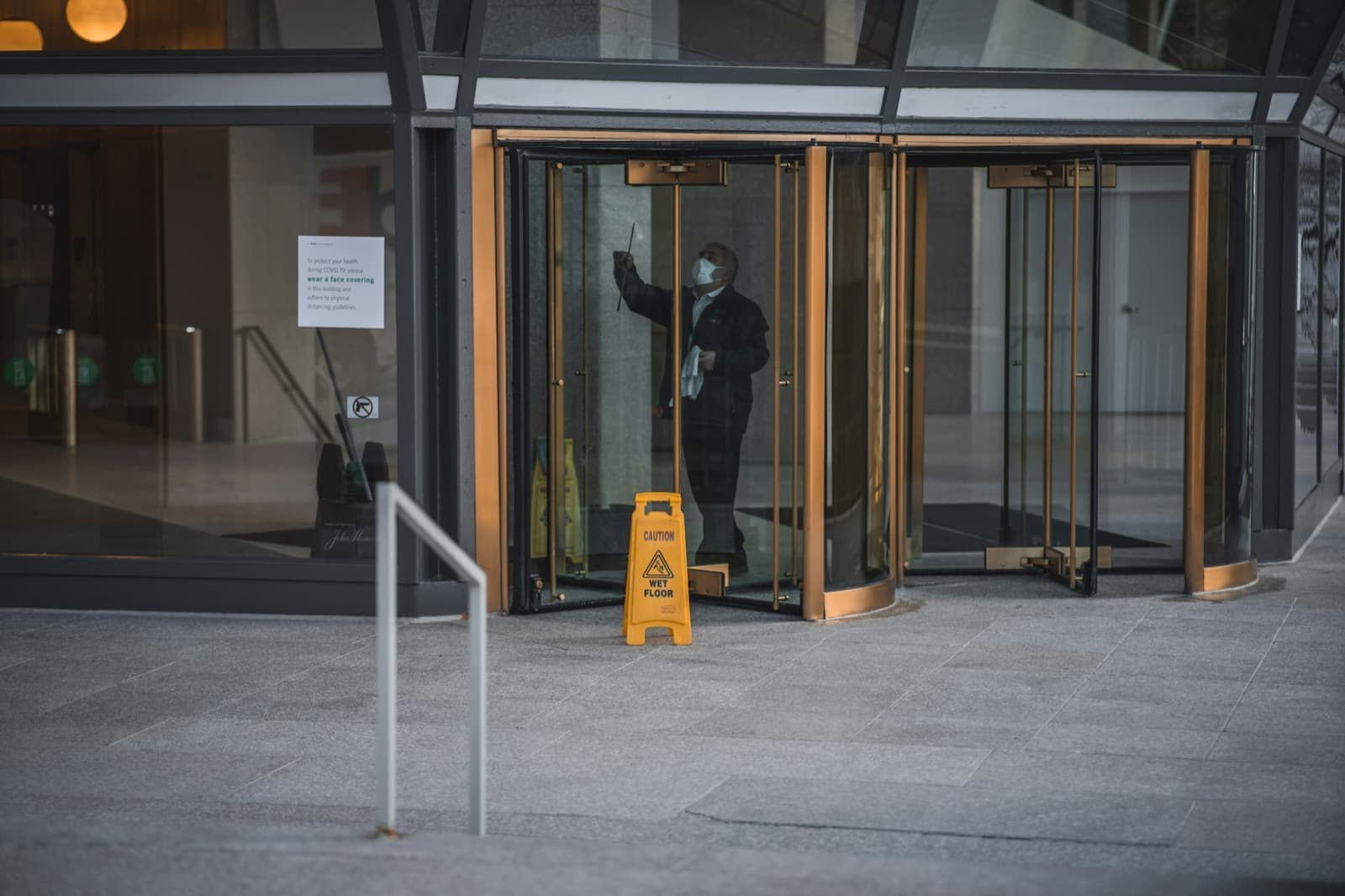
Photo: Mike Cox / Unsplash
Key Takeaways
- Public liability covers claims from third parties such as customers, clients and passers-by; employers' liability covers claims from your own employees.
- Employers' liability is compulsory in Great Britain as soon as you employ someone, subject to limited exemptions; public liability is usually a commercial choice or a contract condition.
- Whether a helper counts as an employee depends on the real working relationship, not the label you give it.
- Many small businesses need both, and neither replaces the other.
Watch Out For
- Assuming a subcontractor or casual helper is self-employed without checking how the relationship works in practice.
- Public liability limits lower than the minimum a client's contract requires.
- Policy exclusions for work at height, heat work or particular trades that you actually carry out.
- An employers' liability certificate that is not displayed or made accessible to employees.
Public liability and employers' liability sound similar, are often sold together, and are regularly confused. They protect against claims from entirely different groups of people, and the law treats them very differently: one is compulsory for almost every employer, the other is not required by law for most businesses. This guide sets out the difference, the legal rules, and how to work out which you need. For the wider range of business covers, including professional indemnity and cyber, see our overview of business insurance.
The Core Difference
The simplest test is to ask who is making the claim. Public liability responds when someone who is not your employee, such as a customer, a client, a member of the public or another contractor's worker, is injured or has their property damaged because of your business activities. Employers' liability responds when one of your own employees is injured or becomes ill because of the work they do for you.
The two policies can be triggered by the same incident. If a ladder falls on a client's conservatory and also injures your apprentice, the damage to the conservatory is a public liability matter and the apprentice's injury is an employers' liability matter. That is why a policy that covers only one of them leaves a gap as soon as you take someone on.
Public Liability in Practice
Public liability exists because the law expects businesses to take reasonable care of the people they deal with. One of the clearest examples is the duty owed by whoever controls premises. Under section 2 of the Occupiers' Liability Act 1957, an occupier owes visitors the common duty of care, meaning such care as is reasonable in all the circumstances to see that the visitor will be reasonably safe in using the premises. The Act adds that an occupier must be prepared for children to be less careful than adults. Scotland has its own occupiers' liability legislation, but the principle is similar.
A shop, a café, a salon or a studio that welcomes customers takes on that kind of exposure every day. Tradespeople face a similar risk on other people's property: a dropped tool, a water leak from a badly made joint, or a trailing cable on a client's stairs. Public liability pays the legal costs of defending such claims and any compensation awarded, up to the policy limit.
There is no general legal requirement to hold public liability insurance, but it is frequently a condition of doing business. Local authorities, main contractors, event organisers and commercial landlords commonly specify a minimum limit, and some clients will ask to see a certificate before you start. Read those contract clauses before you choose a limit, rather than picking the cheapest option and finding it falls short.
Employers' Liability: The Legal Duty
Employers' liability is compulsory. Section 1 of the Employers' Liability (Compulsory Insurance) Act 1969 requires every employer carrying on any business in Great Britain to insure against liability for bodily injury or disease sustained by employees and arising out of and in the course of their employment in Great Britain in that business. Northern Ireland has its own equivalent rules.
GOV.UK states that you must get employers' liability insurance as soon as you become an employer, to cover you for at least £5 million, from an authorised insurer. Regulation 3 of the Employers' Liability (Compulsory Insurance) Regulations 1998 sets that minimum at not less than £5 million for claims arising out of any one occurrence, including costs and expenses. In practice many policies are written with a higher limit, but that legal minimum is the floor.
The penalties are set out plainly. You can be fined £2,500 every day you are not properly insured, and you could be fined £1,000 if you do not display your certificate where employees can access it or show it to inspectors when they ask. Regulation 5 requires copies of the certificate to be displayed at each place of business where you employ relevant employees, in a position where they can be easily seen and read, until the policy expires. GOV.UK confirms that displaying it on your website or work intranet can satisfy this, and advises checking that your insurer is authorised on the Financial Conduct Authority register.
There are narrow exemptions. You do not need employers' liability insurance if you only employ a close family member, such as a spouse, civil partner, parent, child or sibling, or someone who is based outside England, Scotland and Wales. The exemption is narrow: as soon as you employ someone outside those categories, you need cover for them from their first day.
Who Counts as an Employee
The hardest question for many small businesses is not what the policy covers but whether the people working for them are employees at all. Labels such as "subcontractor" or "freelancer" do not settle it. GOV.UK says someone is probably an employee if most of a list of factors apply, including that they are required to work regularly, a manager or supervisor is responsible for their workload and how the work is done, they cannot send someone else to do their work, and they work at the business's premises or at an address specified by the business.
For tradespeople this matters most with labour-only helpers who turn up when told, use your tools and work under your direction. They may look self-employed on paper yet behave like employees in practice. If you are unsure, tell your insurer exactly how the arrangement works and ask for written confirmation of how the policy treats them. Many employers' liability policies can be extended to cover labour-only subcontractors, but only if you declare them.
Being on the other side of the line has consequences too. A self-employed person has no employer's policy to claim against if they are hurt at work, so income cover such as income protection is worth considering to replace earnings during a long absence.
Common Situations
The table below applies the rules above to typical small-business set-ups. It is a starting point, not a substitute for checking your own contracts and working arrangements.
| Public liability | Employers' liability | |
|---|---|---|
| Sole trader working alone at clients' homes | Not legally required, but strongly advisable and often requested by clients | Not required while you have no employees |
| Sole trader who takes on an apprentice | Advisable, as before | Required from the day the apprentice starts |
| Business employing only a spouse or child | Advisable if you deal with the public | Exempt under the family rule; check before relying on it |
| Shop, café or studio open to customers | Advisable because of the duty of care to visitors, and often required by the lease | Required as soon as any staff are employed |
| Contractor using labour-only helpers | Usually required by main contractors | Likely needed if helpers are employees in practice; declare them to the insurer |
If you drive to jobs, remember that injuries caused by your vehicle on the road are dealt with by motor insurance rather than public liability. Our guide to van insurance for tradespeople covers that side, including carrying tools and letting employees drive.
Bottom Line
Ask who could claim against you. If the answer includes members of the public, customers or clients, public liability is the relevant cover, and your contracts may already dictate the limit. If the answer includes anyone you employ, employers' liability is a legal requirement with a fixed minimum, a certificate to display and daily fines for going without. Be honest with yourself and your insurer about how your helpers really work, because that decides which policy responds when something goes wrong.
Frequently asked questions
What is the difference between public liability and employers’ liability insurance?
Public liability covers claims from people who are not your employees, such as customers, clients and members of the public. Employers’ liability covers claims from your own employees who are injured or become ill because of their work for you.
Is employers’ liability insurance compulsory if I only employ family?
You do not need it if you only employ a close family member, such as a spouse, civil partner, parent, child or sibling. The exemption is narrow, so as soon as you employ someone outside those categories you need cover from their first day.
Do I need employers’ liability for subcontractors and labour-only helpers?
It depends on the real working relationship, not the label. Helpers who work under your direction and use your tools may be employees in practice, so tell your insurer how the arrangement works; many policies can be extended to labour-only subcontractors if you declare them.
Can one accident trigger both public liability and employers’ liability?
Yes. If a single incident damages a client’s property and injures your apprentice, the property damage is a public liability matter and the injury is an employers’ liability matter. A policy covering only one leaves a gap once you take someone on.
Where do I have to display my employers’ liability certificate?
It must be displayed where employees can easily see and read it at each place of business, and shown to inspectors when they ask. GOV.UK confirms that displaying it on your website or work intranet can satisfy this.
Sources
- legislation.gov.uk — Occupiers' Liability Act 1957, section 2
legislation.gov.uk
Affiliate Disclosure: Some links in this article may be affiliate links. If you click through and make a purchase or sign up for a service, we may earn a commission at no additional cost to you. This does not influence our editorial recommendations. Read our full affiliate disclosure.
The Consumer Clarity Editorial Team
Our editorial team researches consumer topics independently, analyzing contracts, complaints, and industry data. We accept no sponsored placements and disclose all affiliate relationships. Every guide is reviewed for accuracy before publication.
Our Methodology